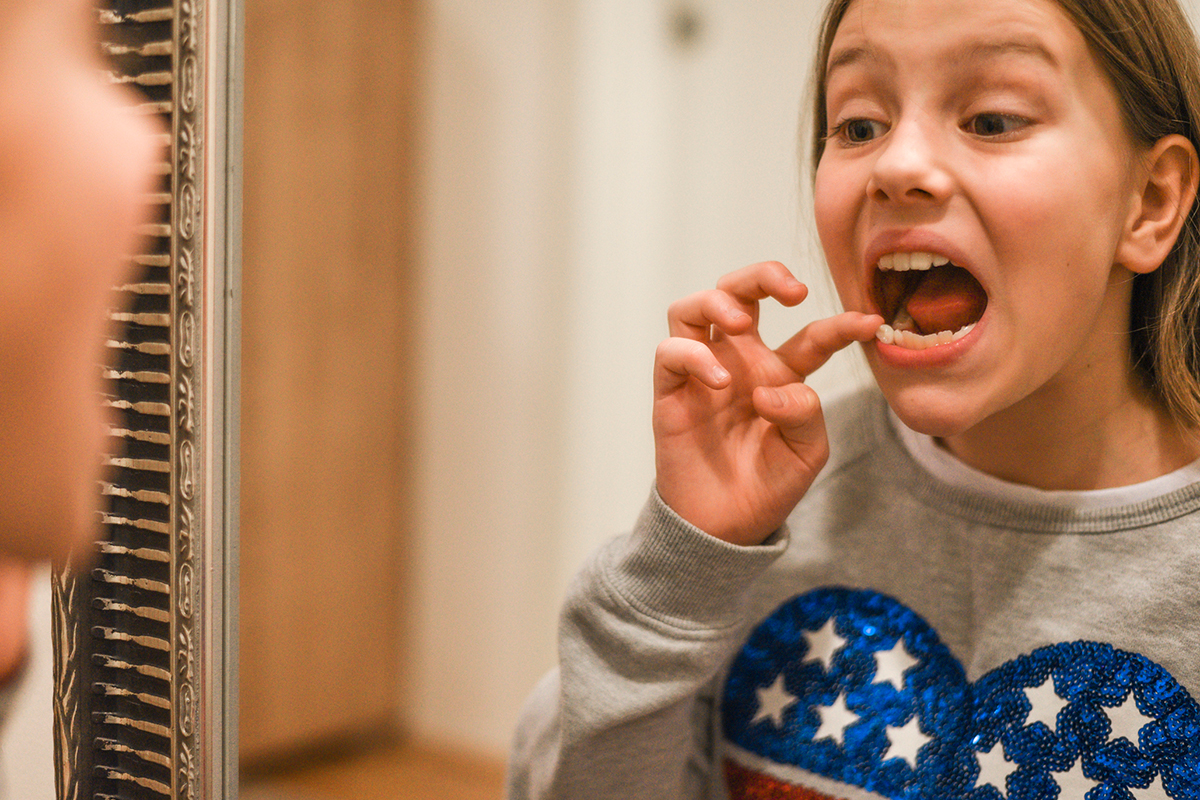
A loose permanent tooth can be alarming, especially when there has been no recent injury to explain the movement. In adults, tooth mobility may be a sign that periodontal disease has damaged the gums and bone that normally hold the teeth firmly in place. As gum disease progresses, the supporting structures around a tooth can weaken enough that the tooth begins to shift or feel loose.
The good news is that a loose tooth does not always need to be removed. Surgical periodontal treatment may help control the disease, repair some of the damage, and extend the lifespan of affected teeth. At Schrott Perio Implants, preserving natural teeth whenever feasible and predictable is an important treatment goal. The practice provides both routine and complex periodontal care, including regenerative procedures designed to restore support lost because of periodontal disease.
Why Does Periodontal Disease Cause Loose Teeth?
Healthy teeth depend on much more than the visible gums. Each tooth is supported by surrounding bone and periodontal tissues that help keep it stable when you bite and chew. Periodontal disease is an infection that can gradually damage these supporting structures.
As periodontal disease progresses, pockets can develop between the teeth and gums. These spaces provide an environment where harmful bacteria can remain around the tooth roots. Over time, infection and inflammation may contribute to the loss of gum tissue and supporting bone.
As more support is lost, teeth may become increasingly mobile. Other signs of advanced periodontal disease can include receding gums, persistent bad breath, and pus around the teeth or gums. Schrott Perio Implants specifically identifies loose teeth as one possible indication that gum disease has progressed to a point where periodontal surgery may be needed.
The amount of movement matters, but it is not the only factor considered when deciding whether a tooth can be saved. A periodontist must evaluate the overall condition of the tooth, the amount of remaining support, the extent of infection, and whether treatment can create a stable and maintainable environment.
For that reason, noticing a loose tooth should prompt an evaluation rather than an assumption that extraction is inevitable.
How Surgical Periodontal Treatment Can Help Save Loose Teeth
Surgical periodontal treatment is used when gum disease has caused damage that cannot be adequately managed through routine periodontal care alone. The goal is to address the infection and create healthier conditions around the affected teeth.
Periodontal surgery can involve reshaping the gums and bone to reduce periodontal pockets, removing tartar and bacteria, eliminating diseased tissue, or regenerating lost bone and gum tissue. These approaches can help slow the progression of periodontal disease and repair some of the damage it has caused.
Two procedures offered at Schrott Perio Implants can be especially important when treating advanced periodontal disease:
Periodontal regeneration: Regenerative procedures are intended to restore parts of a tooth’s support system that have been lost because of periodontal disease. Treatment may involve bone grafts, growth factors, and collagen membranes to encourage regeneration of lost bone and gum tissue. This approach is also known as guided tissue regeneration.
Pocket reduction surgery: During this procedure, the periodontist creates a gum flap to gain access to the tooth and root surfaces. Bacteria, tartar, and infected tissue can then be removed. Bone affected by gum disease may also be smoothed before the gum is repositioned to reduce the depth of periodontal pockets. Smaller pockets make it easier to control the bacteria associated with periodontal disease.
In many cases, periodontal regeneration and pocket reduction surgery are performed together. The exact approach depends on the location and severity of the disease and the condition of the supporting tissues.
When Can Surgical Periodontal Treatment Save a Loose Tooth?
Not every loose tooth can be saved. However, mobility by itself does not necessarily mean that extraction is the only option.
Schrott Perio Implants emphasizes preserving natural teeth whenever possible. The practice’s goal is to save teeth when doing so remains feasible and predictable with available periodontal techniques and technology. Its surgical periodontal procedures are designed to reduce periodontal pockets and, when appropriate, regenerate bone that has been lost to gum disease.
Whether a particular tooth can be preserved depends on its individual condition. A periodontist needs to determine how much supporting tissue remains and whether the underlying periodontal infection can be successfully controlled.
Timing can also be important. Periodontal disease tends to become more destructive when it progresses without appropriate treatment. A tooth with significant bone and tissue loss may eventually reach a point where predictable preservation is no longer possible.
Patients should therefore avoid waiting for a loose tooth to become extremely mobile before seeking specialized care. Earlier evaluation can provide a clearer understanding of the available treatment options.
It is also important to remember that surgical treatment is only one part of periodontal care. Schrott Perio Implants offers non-surgical treatments such as scaling and root planing as well as regular periodontal maintenance. Ongoing maintenance can be imperative for keeping gum disease from progressing after the active infection has been brought under control.
What to Expect From Periodontal Surgery
Periodontal surgery may sound intimidating, but patient comfort is an important part of treatment. Schrott Perio Implants performs periodontal surgery using appropriate local anesthesia. Sedation dentistry options are also available, including oral and IV sedation. When IV sedation is used at the practice, an anesthesiologist is on site to supervise the procedure.
Recovery depends on the type and extent of surgery performed. According to the practice, gums generally require a few weeks to heal following periodontal surgery. Patients may need to follow dietary restrictions during recovery, including choosing softer foods and avoiding hard or crunchy foods while the surgical area heals. Temporary sensitivity to cold may also occur.
Following post-operative instructions and maintaining recommended periodontal care afterward are important parts of protecting the results.
Protect Your Natural Teeth With Periodontal Care
Finding out that a permanent tooth is loose can be frightening, but extraction is not automatically the next step. Advanced periodontal treatment may be able to control infection, reduce deep periodontal pockets, regenerate some lost supporting tissue, and help extend the lifespan of teeth affected by gum disease.
Schrott Perio Implants provides comprehensive periodontal care in Belmont, MA, with a focus on preserving natural teeth whenever doing so is feasible and predictable. The practice serves patients throughout the Greater Boston area and combines advanced periodontal techniques with personalized care in a friendly, non-judgmental environment. If you have noticed a loose tooth or other symptoms of advanced periodontal disease, a periodontal evaluation can help determine whether surgical treatment may help preserve your smile.
Frequently Asked Questions About Surgical Periodontal Treatment
Does a loose adult tooth always need to be extracted?
No. A loose tooth may sometimes be preserved if periodontal treatment can successfully address the disease and the tooth still has enough support for a predictable outcome. Schrott Perio Implants aims to save natural teeth from extraction whenever feasible using currently available periodontal techniques and technology.
What are signs that I may need periodontal surgery?
Signs of advanced periodontal disease can include visibly receding gums, persistent bad breath, loose teeth, and pus around the teeth or gums. A periodontal examination is needed to determine whether surgery or another form of treatment is appropriate.
Can lost bone around a loose tooth be regenerated?
In certain situations, periodontal regeneration can be used to restore parts of the tooth’s support system lost to periodontal disease. Schrott Perio Implants uses techniques that may include bone grafts, growth factors, and collagen membranes to regenerate lost bone and gum tissue.
What happens if advanced periodontal disease is left untreated?
Without appropriate treatment, periodontal disease may continue to progress and cause additional damage to the tissues and bone supporting the teeth. Advanced disease can ultimately contribute to tooth loss, which is why evaluation and treatment should not be unnecessarily delayed.
Is periodontal surgery painful?
Periodontal surgery is performed using local anesthesia, and Schrott Perio Implants also offers sedation options for appropriate patients. Some mild discomfort may occur during healing, and temporary tooth sensitivity is also possible after treatment.
At Schrott Perio Implants, we provide comprehensive periodontal and dental implant care with an emphasis on preserving natural teeth whenever possible. Our Belmont practice uses modern techniques for routine and complex periodontal treatment while providing care in a friendly, non-judgmental environment. If you are concerned about loose teeth or advanced gum disease, contact our team to discuss your treatment options.