Losing most or all of the teeth in an upper or lower arch affects far more than your appearance. It can change the way you eat, speak, and feel in social situations. Many of our patients come to us after years of dealing with failing teeth, loose dentures, or ongoing gum disease, and they want a solution that feels stable and permanent. For many people, full arch dental implants are that solution.
At Schrott Perio Implants in Belmont, MA, we plan and place full arch reconstructions for patients throughout the Greater Boston area. In this article, we explain how full arch implants work, who tends to be a good candidate, and which factors we evaluate before recommending treatment.
What Are Full Arch Dental Implants?
Full arch dental implants replace an entire row of teeth using a small number of implants placed in the jawbone. Rather than placing one implant for every missing tooth, we strategically position several implants, often four to six per arch, to support a prosthesis that spans the full upper or lower jaw.
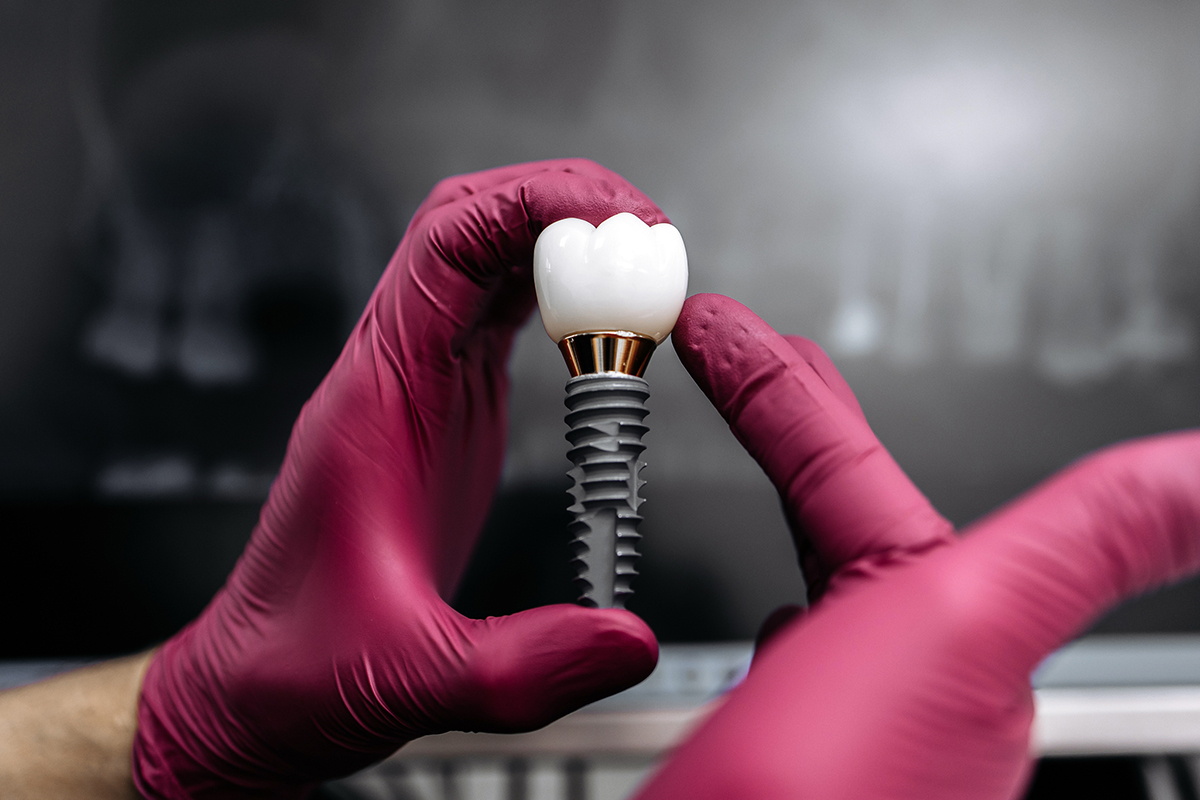
The implants themselves are small posts that fuse with the surrounding bone in a process called osseointegration. Once that bond forms, the implants function much like natural tooth roots. They create a secure foundation for replacement teeth that stay in place when you eat, laugh, and talk.
Full arch restorations can be fixed, meaning only your dental team can remove them, or they can be implant-supported overdentures that snap onto the implants and come out for cleaning. We review both options during your consultation so you understand the differences in stability, maintenance, and investment.
Who Is a Good Candidate for Full Arch Dental Implants?
Many adults who are missing most of their teeth can benefit from full arch treatment. Strong candidates usually share several of the following characteristics.
- You are missing most or all of your teeth in one arch. Full arch treatment is designed for patients who need to replace an entire row of teeth rather than one or two.
- Your remaining teeth are failing. Teeth affected by advanced decay, severe periodontal disease, fractures, or significant looseness may not be predictable to save. In these cases, an implant-supported arch can be a more reliable long-term option.
- You are unhappy with your dentures. Dentures that slip, rub, or limit what you can eat are one of the most common reasons patients ask us about full arch implants.
- You have enough jawbone, or are willing to rebuild it. Implants need adequate bone to anchor securely. If bone has been lost, grafting can often make treatment possible.
- You are in good general health. Healthy healing supports successful integration of the implants.
- You are committed to oral hygiene and follow-up care. Implants cannot decay, but the gums and bone around them still need daily care and professional maintenance.
Age alone is rarely a barrier. We regularly treat older adults who are healthy enough for oral surgery and want a better quality of life. What matters most is your overall health, the condition of your gums and bone, and your personal goals.
Our philosophy is to save natural teeth whenever it is feasible and predictable. If your teeth can be preserved with periodontal therapy, we will tell you. Full arch implants are best suited for situations where keeping the remaining teeth is no longer a realistic long-term plan.
Factors That May Require Additional Planning
Some patients are not ready for full arch implants right away, but that does not mean treatment is off the table. Several conditions can be addressed before or during the process.
- Bone loss. After teeth are lost, the jawbone gradually shrinks. Long-term denture wear and advanced gum disease can speed up this process. We offer bone grafting procedures, including ridge augmentation and sinus floor elevation, to rebuild bone where implants need support. Strategic implant angling can also help us make the most of the bone you already have.
- Active gum disease. Infection in the gums must be controlled before implants are placed. Untreated periodontal disease can interfere with healing and threaten implants over time.
- Smoking. Tobacco use reduces blood flow and slows healing, which raises the risk of implant complications. We encourage patients to quit or cut back significantly before treatment.
- Uncontrolled medical conditions. Conditions such as poorly managed diabetes can affect how well your body heals. Many patients with well-controlled conditions do very well with implants, so we review your health history carefully and coordinate with your physician when needed.
- Teeth grinding. Heavy clenching or grinding places extra force on implants. A protective night guard is often part of long-term care for these patients.
What to Expect During Full Arch Treatment
Every full arch case begins with a thorough consultation. We examine your teeth, gums, and bite, review your health history, and use 3D imaging to evaluate bone volume and locate important anatomical structures. This information allows us to design a treatment plan tailored to your mouth.
We use an advanced computer-guided implant process to plan implant positions digitally before surgery. Guided placement improves precision and safety and helps us position each implant where it will best support your new teeth.
On the day of surgery, any remaining failing teeth are removed and the implants are placed. In many cases, a temporary set of fixed teeth can be attached shortly afterward, so you do not have to go without teeth while you heal. Whether this is possible depends on bone quality and implant stability, which we assess during the procedure.
Over the following months, the implants integrate with your jawbone. Once healing is complete, your final prosthesis is fabricated and attached, giving you a durable and natural-looking smile.
For patients who feel nervous about treatment, we offer both oral and IV sedation. When IV sedation is used, an anesthesiologist is on site to supervise the procedure, so you can stay comfortable and relaxed throughout your appointment.
How Full Arch Implants Compare to Traditional Dentures
Traditional dentures rest on the gums and rely on suction or adhesive to stay in place. As the jawbone shrinks over time, dentures often loosen and need relining or replacement. Full arch implants offer several meaningful advantages:
- Stability. Your teeth stay securely in place without adhesives.
- Chewing ability. Patients can enjoy a much wider variety of foods with confidence.
- Bone preservation. Implants stimulate the jawbone, which helps slow the bone loss that follows tooth loss.
- Comfort. A fixed upper arch does not need to cover the roof of your mouth, so taste and comfort feel more natural.
- Appearance and speech. Well-designed full arch restorations look natural and help you speak clearly.
Find Out If Full Arch Implants Are Right for You
The best way to know whether you are a candidate for full arch dental implants is a personalized evaluation. Even if you were told in the past that you do not have enough bone, or you have worn dentures for many years, modern grafting techniques and careful planning have made full arch treatment possible for many patients who once thought it was out of reach.
At our Belmont practice, our board-certified periodontists combine advanced diagnostics, guided implant surgery, and a patient-centered approach to help you regain a complete and confident smile. We welcome patients from Belmont, Cambridge, Arlington, Watertown, and communities throughout the Greater Boston area.
Frequently Asked Questions About Full Arch Dental Implants
How many implants are needed for a full arch?
Most full arch restorations are supported by four to six implants per arch. The exact number depends on your bone volume, bite forces, and the type of prosthesis we recommend.
How long do full arch dental implants last?
With good home care and regular professional maintenance, the implants themselves can last for decades. The prosthetic teeth may eventually need repair or replacement due to normal wear.
Am I too old for full arch implants?
There is no upper age limit for implants. Your overall health, bone condition, and ability to heal matter far more than your age.
Can I get full arch implants if I have bone loss?
In many cases, yes. Bone grafting, sinus lifts, and angled implant placement can help create a stable foundation for patients with significant bone loss.
How do I care for full arch dental implants?
Brush twice daily, clean beneath the prosthesis with a water flosser or specialized floss, and keep up with professional maintenance visits. These habits protect the gums and bone that support your implants.
Schrott Perio Implants is an award-winning periodontal and dental implant practice in Belmont, MA, offering full arch reconstructions, bone grafting, gum grafting, and comprehensive periodontal care for patients throughout the Greater Boston area. To find out if full arch dental implants are right for you, contact us today to schedule a consultation.